Jiří, right at the start I have to ask you about one thing that caught my eye on your LinkedIn profile. Your name is listed as Jiří “George” Semotán. Where did that “George” come from? Do you perhaps have British ancestors?
I don’t have any English ancestors, but it’s linked to the time I spent working in international trade. In an English-speaking environment, my first name is practically unpronounceable, so “George” served as a professional nickname. Today, I think it could easily disappear – after all, I’m mainly in charge of Czech business and Czech clients.
Speaking of your current role as Sales Director at OKIN Facility – why facility management in particular?
It was a gradual development, but it all followed on quite logically. Right at the start, I worked in a hotel, where, as part of the technical department, I helped organise various conferences and events, but mainly dealt with the operation and maintenance of three buildings. Then I moved to a family business that develops its own software for hotels and restaurants – cash register and booking systems.
And were you always in charge of sales?
Yes, from day one. I gradually learnt how to approach potential clients, whether in person or online. I often literally went from pub to pub. I subsequently combined sales with network administration. I first got my hands on a computer when I was about five years old, back during the Velvet Revolution. Over time, I started building my own computers, and it all just fell into place.
I then moved from the family business to JetBrains, which is an exceptionally interesting company with a global reach. I started working in international sales and was able to make full use of the English I’d been studying since I was a child. And that actually brings us back to ‘George’ and the reason why it came about.
Let me briefly digress here, because English really caught my interest. For many parents, it’s a dream for their child to enjoy learning a foreign language. Was that your own idea, or was it more down to your parents’ influence?
It all started in my first year of primary school, which I joined shortly after the revolution, at a time when a new world was beginning to open up. A classmate’s mum spoke English and started teaching it to the children after school. Another factor was the lingering influence of socialism in education and a certain desire to change the school system. At that time, I got into the first language-focused primary school in Prague 4, Horáčkova, where I continued into Year 3. I’ve always enjoyed languages.
That’s interesting. But let’s get back to your work experience.
After JetBrains, I spent the next five years at IceWarp, where I started as the first sales representative for direct licence sales abroad and later went on to lead this department, which we essentially built from scratch. I then joined a division of Canon that no longer exists today. We digitised various types of documents for clients from all over the world, particularly incoming invoices. It’s quite astonishing how high a percentage of documents still existed in paper form back then, and our aim was to extract all the necessary data from them for processing in the shortest possible time. There, I had the opportunity to learn about the sale of truly complex services, combining human labour with technologies for scanning, OCR and the like. And then came iotor, which is now part of the OKIN group.
What attracted you to iotor?
IoT was something new to me, but at the same time very appealing precisely because it can bridge two worlds. In IT, you often sell licences – ones and zeros – and nothing tangible remains after the work is done. I’ve always been a bit envious of friends who are, for example, carpenters. When they finish a project, there’s a kitchen standing before them – the tangible result of their skills, something they can actually touch.
And that’s exactly what I found at iotor. IoT isn’t just about data and software, but also about the physical world – about sensors and technologies that are actually running in buildings. When I walk past a building managed by iotor today, I know that the technology is really working there and helping the client manage the building more intelligently and efficiently. The connection between the digital and the real world makes perfect sense to me.
What’s more, iotor’s activities are a natural part of facility management. At OKIN Facility, we provide comprehensive building management, so the move to OKIN Facility was a logical and natural step for me. I’ve simply broadened my scope. To put it simply: I started out in a building – a hotel – and today I’m on the service provider’s side, ensuring that everything runs smoothly for everyone in that building.
Is it difficult to sell facility services?
It is. We operate in an extremely competitive environment, and facility management is a bit overlooked profession. These services are taken for granted – until they stop working. If the flush doesn’t work or there’s no soap, everyone notices it straight away. But very few people are willing to pay for a quality service. It’s a constant battle between quality and price.
What should a client considering outsourcing facility services focus on?
The general rule applies: if something is suspiciously cheap, it’s unlikely to be of high quality. It’s just like with shoes – you don’t expect cheap ones from the market to last ten years. OKIN Facility may not be the cheapest, but the client gets a partner who has been immersed in the world of facilities for over 30 years and can offer advice, not just deliver a service. Moreover, if you look at OKIN Facility today, it is far from being just about facility management. Thanks to our courage to venture into uncharted waters, we now have countless unique solutions in our portfolio for energy management, data monitoring – for example, for the FMCG and pharmaceutical industries – and any other applications that can be physically measured. We successfully provide technological cleaning services to industry, as well as robotic cleaning, HSE services and inspection activities. In the IT sector, we create solutions for business process automation, document management digitisation and general application development. This is precisely where I see our great added value. We understand building operations and the realities of the built environment, and clients see us as a partner who thinks holistically, highlights risks and seeks solutions that make sense in the long term.
How do you see the future of facility management in the coming years?
I don’t have a crystal ball, but if you look around, it’s clear that technological development is happening very quickly. I’d like technology to help us more and faster than it currently does in practice. We focus a lot on robotic cleaning, and I believe that, thanks to our experience and collaboration with the manufacturers of these technologies, we are among the leaders in this field. At the same time, however, we recognise that technology still has its limitations and cannot function without human input. So we decided to combine these two factors, and I believe this has resulted in a very attractive proposition for the client.
The environment in which these technologies operate is also important. The vast majority of the buildings we manage today have been in place for a long time. That is why we focus on so-called ‘retrofitting’ – modernising and digitising environments that have remained unchanged for decades. With new projects, however, we go even further, working with developers and end clients to ensure that buildings are ready for new technologies from the outset.”
In your role, you also manage a team of salespeople. What do you think is the key to a successful team?
The key lies in a thorough understanding of our own services and products, as well as a strong grasp of the real world. When our salespeople enter a building, they quickly assess what is working and what could be improved. And, of course, it’s also about being active and proactive. In my view, these are the key factors that distinguish a good team from a truly exceptional one.
Moreover, this deep knowledge of our services is reflected in the fact that our most successful salespeople have operational experience. If necessary, they are able to step in and manage operations themselves.
Jiří, your job also requires proper rest. How do you relax?
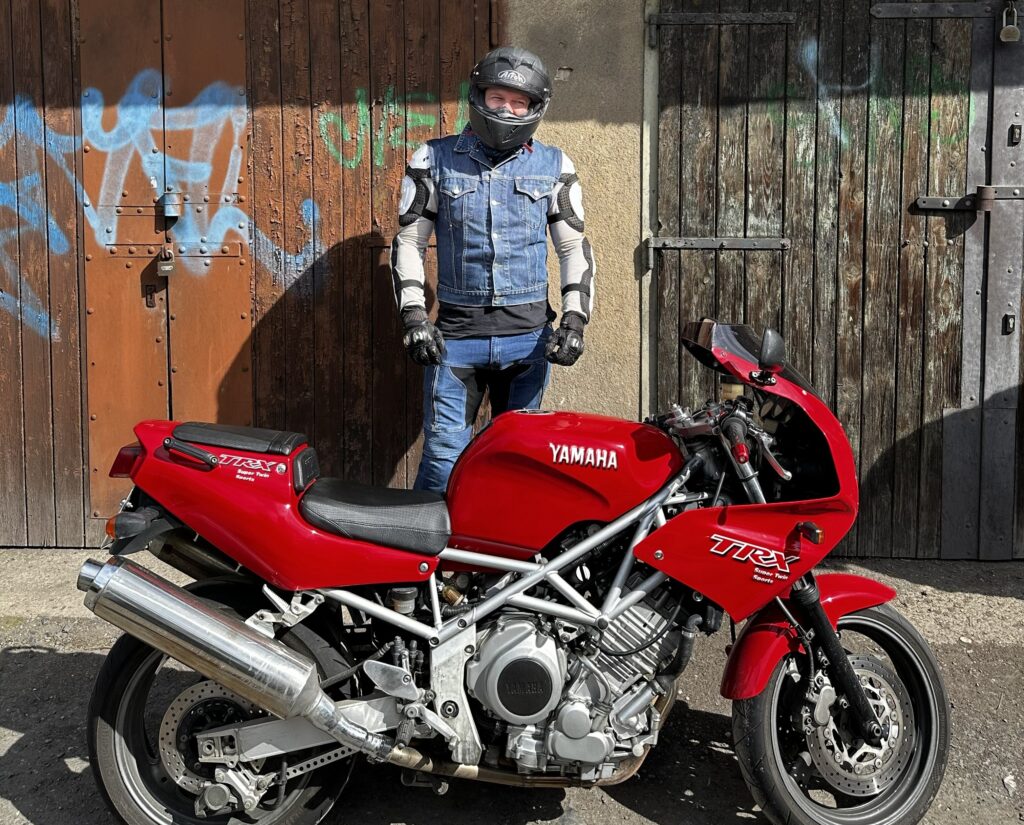
For me, the best way to relax is in the offline world. Having been surrounded by technology and all kinds of screens since childhood, I find the greatest relaxation in completely switching off everything digital. Not even checking the time – that’s the ultimate form of relaxation for me. That’s why, whenever I can, I hop on a carburettor-powered motorbike or a bike without a battery.”
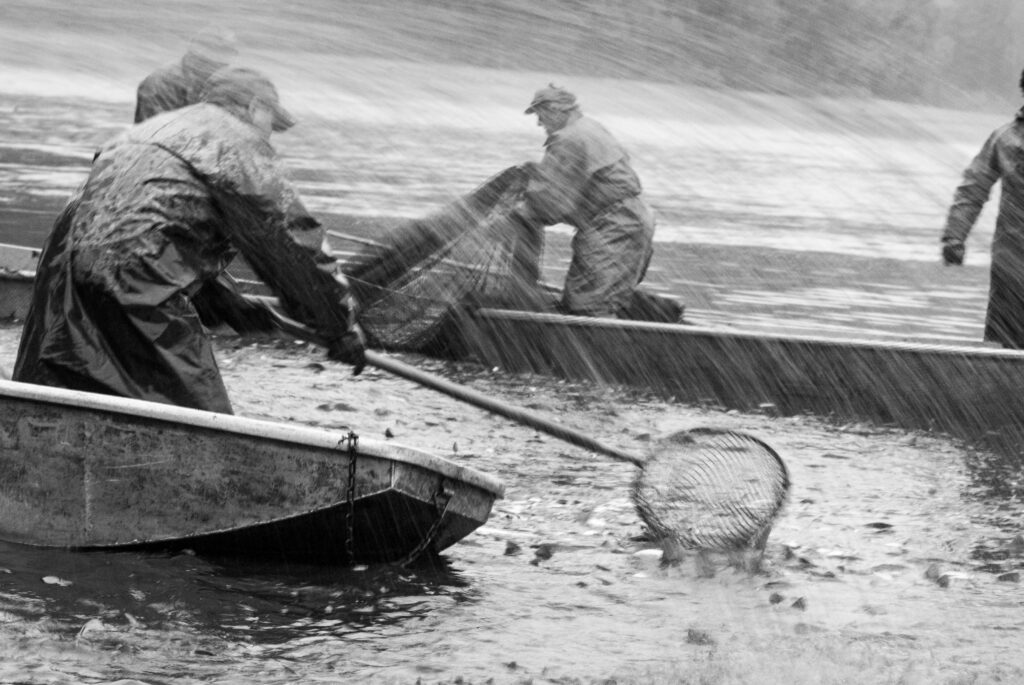
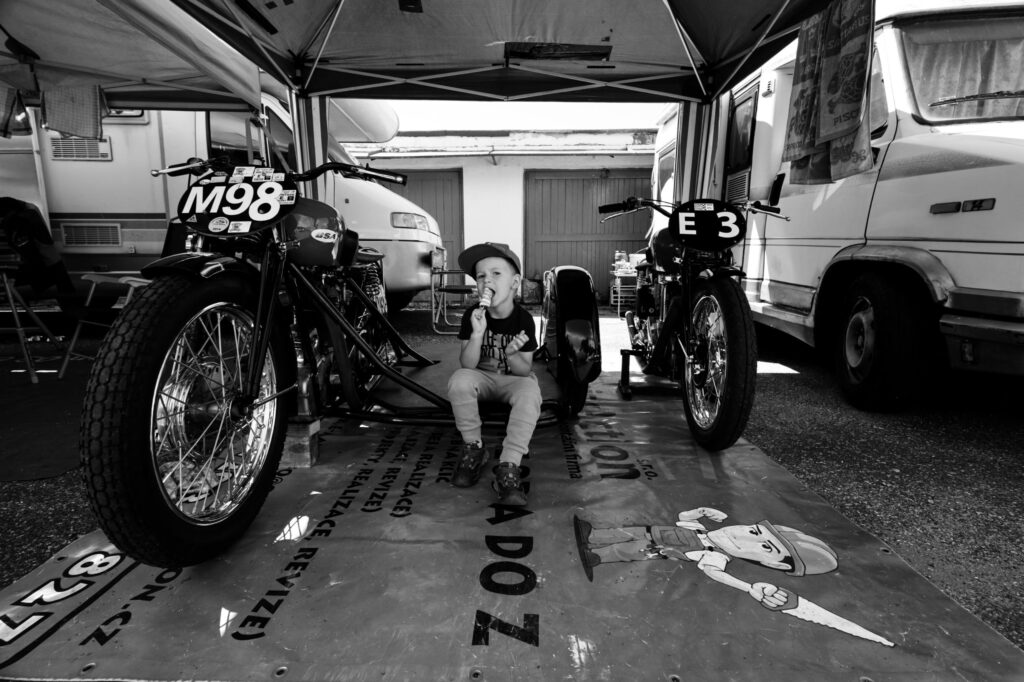
Then there’s time spent in the countryside, enjoying the outdoors with my children after our trips. I absolutely love travelling, even roughing it in a tent – these days with the whole family. I used to be very keen on photography, and I still enjoy taking photos today, mainly of my family, although I don’t have much time for it anymore. I used to focus primarily on portraits and reportage photography. I’ve included a few photos as examples.

To wrap up our conversation, I’m curious if you have a personal motto that often comes to mind?
There are actually several. They’re inspired by my childhood hero, Arnold Schwarzenegger. Whatever you may think of him, he’s an incredibly inspiring person who has achieved a great deal. Sport has been a big part of my life, and for a time I was also into fitness and bodybuilding. What he talks about simply works – in sport, in life, and even more so in business. Years ago, he shared his six rules of success with students, and I’m convinced they truly work.