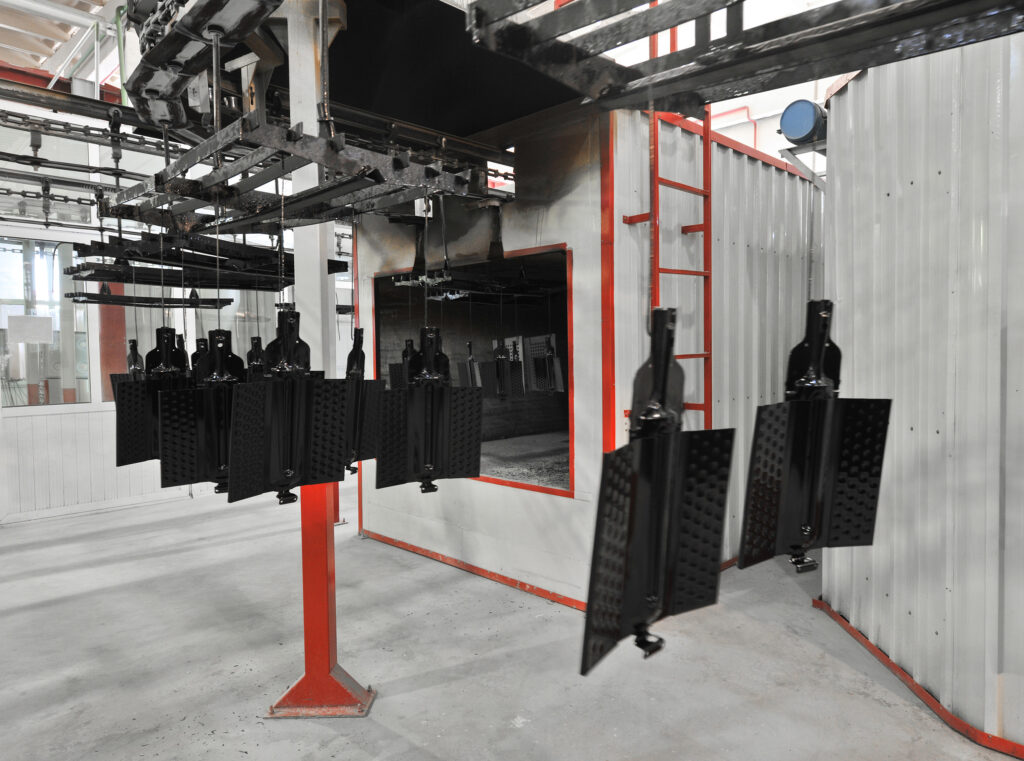
Stripping is not just for rejects or poorly painted products. It is also very often used during the regular maintenance of painting equipment and technological components, where paint gradually accumulates and affects the quality and efficiency of production. Typically, these include hangers, hooks, grids, chains or structural elements of painting lines. Without their regular cleaning, paint application deteriorates, leading to higher material consumption and the risk of further defects.
A correctly chosen paint stripping method is therefore not merely a fix for a problem, but an important tool for maintaining production quality, reducing costs and extending the service life of the components in use.
1. What is the essence of industrial paint stripping
The essence of industrial paint stripping is the removal of layers of paint or other organic coatings from the surface of parts so that they can be reused. It is not merely a matter of cleaning, but a controlled process that restores the material’s original properties and prepares it for the next step, whether that be repainting, repair, or return to production.
Paint stripping as an alternative to replacing parts
In practice, this means that instead of scrapping or purchasing new components, existing parts can be effectively reconditioned, thereby generating significant financial savings. This applies not only to the products themselves but also to paint shop equipment, which is subjected to long-term wear from layers of coating.
Stripping restores their:
- functionality
- accuracy
- readiness for further use
This has a direct impact on the quality of the final product and production stability.
2. What methods are used for paint stripping
In industrial practice, several paint stripping methods are used, selected according to the type of material, coating thickness and the desired result. There is no single universal solution; the key lies in the right combination of technology and specific operational application. Among the most commonly used methods is thermal paint stripping by pyrolysis, which works on the principle of decomposing organic coatings at high temperatures in the absence of oxygen. It is ideal wherever it is necessary to reliably remove significant layers of paint without damaging the part. It is used primarily on more robust steel components, such as hinges, hooks, grates or structural parts of production lines. The second most commonly used method is chemical paint stripping, which uses special baths to dissolve the coating. Compared to pyrolysis, this is a gentler process, suitable for more sensitive materials that cannot withstand high temperatures, are more delicate or have complex shapes. In addition to these two main approaches, there is also laser paint stripping and dry ice cleaning. These methods are used only in specific cases where very precise intervention or minimal surface stress is required. In everyday industrial operations, however, pyrolysis and chemical paint stripping remain the key methods. These cover most of the practical needs of production and maintenance in paint shops.
3. Where industrial paint stripping is used in practice
Industrial paint stripping is primarily used in sectors where repeated painting takes place and where surface quality directly affects the final product and production efficiency. These include suspension systems, hooks, grates, conveyor systems and various structural components. It is precisely on these parts that layers of paint gradually build up, which must be removed regularly to maintain their functionality and the quality of the paint finish.
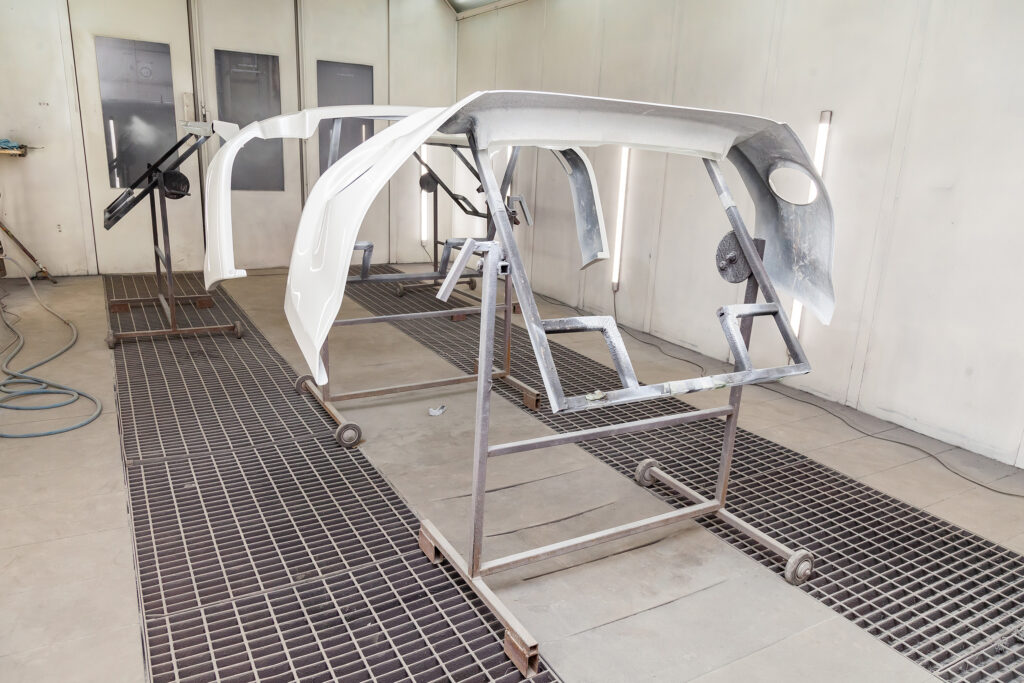
Paint stripping is also used to address defective products – for example, poorly painted parts that need to have their original coating removed and be returned to production for repainting. This helps minimise scrap rates and reduce material and financial losses.
Typical areas of application
We most commonly encounter paint stripping in the following sectors:
- automotive and component manufacturing
- engineering
- metal structure manufacturing
- electrical engineering
- specialised paint shops and surface treatment facilities
However, it also has its place in other sectors where the cleanliness and functionality of technological components are key, for example:
- the food industry
- pharmaceutical manufacturing
4. What are the benefits of paint stripping for operations and production
Industrial paint stripping is not just a technical process, but above all a tool for streamlining production and reducing operating costs.
Lower costs than replacing parts
One of the main reasons why companies use it is to save costs. Compared to manufacturing or purchasing new components, it is a significantly cheaper solution.
Instead of scrapping parts, they can be:
- cleaned
- be repaired
- put back into service
This applies to both products and paint shop equipment. One of the most effective methods of paint stripping in this context is pyrolysis, which is not only low-cost but also environmentally friendly.
Reuse and extended service life
Stripping significantly extends the service life of used components. Parts that would otherwise end up as waste are returned to the production cycle. The result is better material utilisation and less pressure to purchase new parts.
Typically, these include:
- hinges and hooks
- grates and structures
- parts from paint shops intended for repainting
More efficient maintenance and fewer downtimes
Including paint stripping in regular maintenance helps prevent problems that would otherwise lead to unplanned downtime during operation. This allows for greater control over the condition of the equipment and fewer emergency interventions.
5. What to look out for when choosing the right process
Choosing the right paint stripping method is not a one-size-fits-all solution and always depends on the specific application. An incorrectly chosen process can lead to damage to the part, incomplete removal of the coating, or unnecessarily high costs. It is therefore necessary to take several key factors into account.
Material and design of the part
The basic criterion is the material from which the part is made. A different process is chosen for robust steel components and a different one for thin-walled parts.
It is important to assess:
- temperature resistance
- sensitivity to chemicals
- shape complexity and surface accessibility
For example, pyrolysis is suitable for durable metal parts, whilst more delicate components require a gentler approach.
Type and thickness of coating
The coating itself also plays a major role. There is a difference between a thin layer and multi-layered coatings that result from repeated painting. Thick and multi-layered coatings are usually treated thermally, whilst chemical stripping makes sense for more delicate applications. In addition, the type of paint and the degree of surface contamination must also be taken into account.
Testing and verifying the suitability of the process
Particularly with chemical paint stripping, it is recommended in practice to test the specific combination of material and paint in advance. This is because each combination may behave differently. This allows the entire process to be optimised before it is put into regular operation.
Summary
In practice, industrial paint stripping is an effective way to reduce costs, extend the service life of components and maintain consistent production quality. Whether it involves the maintenance of painting equipment or the repair of defective products, a correctly chosen process has a direct impact on operational continuity and the final product.
In real-world operations, however, paint stripping is rarely an isolated activity. It is often part of a broader programme of care for technology, equipment and the entire production environment. This is precisely where the added value of the OKIN Facility approach lies, as it combines technological cleaning with comprehensive maintenance of industrial operations. Thanks to its experience across various types of production, OKIN Facility can design solutions that make sense not only technically, but also operationally and economically. It is not just about paint stripping itself, but about integrating it correctly into the overall functioning of production. If you are looking for an effective way to manage paint stripping in your facility, do not hesitate to contact OKIN Facility.